Isometric Landing Pages: A Modern 3D Boost for Your Digital Business
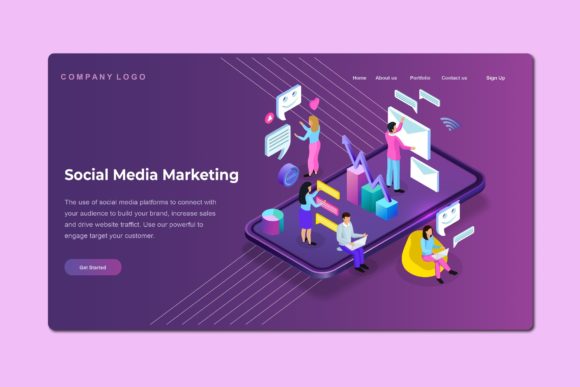
Imagine walking into a room where everything is neatly organized on angled shelves, each item perfectly visible and accessible. That's the feeling an isometric design brings to your website—it creates a world of depth and clarity that flat designs often struggle to achieve. If you're looking to make your online presence more engaging and intuitive, exploring the potential of an isometric landing page template could be the strategic move your brand needs. This design approach isn't just about looking modern; it's about creating a visual language that guides your visitors effortlessly toward your key messages and calls to action.
Why Isometric Design Resonates in a Crowded Digital Space
In a sea of similar-looking websites, the isometric style offers a distinct advantage. It uses a specific form of axonometric projection where the x, y, and z axes are equally foreshortened, resulting in a cohesive, three-dimensional look without complex perspective vanishing points. This creates a sense of order, precision, and sophistication. For businesses, particularly those in tech, SaaS, finance, or creative services, this visual metaphor is powerful. It can represent interconnected systems, layered services, or complex processes in a way that feels both understandable and visually striking. The consistent angles and clean lines inherent to the style help build a strong, recognizable brand identity that feels both innovative and trustworthy.
Practical application is where this template shines. Consider a startup offering a suite of productivity tools. An isometric landing page can visually separate each tool—calendar, task manager, file storage—into distinct 3D objects on a shared plane, showing how they integrate. For an e-commerce site, products can be displayed as interactive 3D models, allowing customers to visualize items from multiple angles. The included smart layers and 100% vector format mean you're not stuck with static images. You can easily swap out elements, change color schemes to match your brand palette, and adjust text to reflect your unique value proposition. The 1920-pixel width ensures your design looks sharp on high-resolution screens, while the scalable vector nature means it remains crisp on any device.
From Template to Brand Asset: Making It Your Own
The true value of a design asset like this lies in its adaptability. The provided Adobe Illustrator files (.AI & .EPS) are fully editable, giving you complete creative control. You're not just buying a pre-made page; you're acquiring a robust design system. Start by aligning the template with your existing brand guidelines. Replace the placeholder colors with your primary and secondary brand colors. The RGB format is ideal for digital use, ensuring vibrant displays across monitors and mobile screens. Swap the free font used in the preview with your own brand typeface—perhaps a clean sans-serif for headings and a highly readable serif for body text to create a compelling font pairing.
Think beyond the homepage. The modular nature of an isometric design system makes it incredibly versatile for other marketing assets. Extract the 3D icons and illustrations for use in:
- Social Media Graphics: Create eye-catching posts for Instagram or LinkedIn that stand out in a feed.
- Blog Post Headers: Give your articles a professional, cohesive look that reinforces brand recognition.
- Email Newsletters: Use stylized isometric elements in your email templates to increase click-through rates.
- Pitch Decks & Presentations: Explain your business model or product features with clear, engaging visuals.
- Print Collateral: Adapt the high-resolution vectors for brochures, posters, or trade show materials.
This approach ensures visual consistency across every customer touchpoint, strengthening your brand identity and making your marketing efforts more efficient and impactful.
Practical Considerations for Implementation
Before diving in, a few practical steps will ensure success. First, audit your content. Isometric designs work best when they support and clarify your message, not when they clutter it. Plan your page layout to balance these engaging 3D elements with ample white space and clear, concise copy. The goal is to guide the eye, not overwhelm it.
Second, pay attention to performance. While the vector files are clean, if you export complex scenes as raster images for the web, optimize them properly. Use modern formats like WebP and ensure your site's loading speed remains fast—a critical factor for both user experience and SEO.
Finally, consider the licensing. The template comes with a standard license for use in your projects, but always review the terms to ensure it covers your intended use, especially if you plan to use the final design in merchandise for sale or in a product you distribute to clients. This due diligence protects your investment and keeps your projects compliant.
Ultimately, adopting an isometric design is about more than just a visual refresh. It's a strategic decision to present your business with a sense of depth, order, and innovation. It helps translate complex ideas into intuitive visuals, making it easier for potential customers to understand what you offer and why it matters. By customizing this template thoughtfully, you can build a digital presence that is not only beautiful but also functionally superior, giving your audience a clearer path to engage with your brand. Now is the time to step into that third dimension and let your business be seen from a new perspective.